

Henrique Costa, Urbanization Director, Mitrelli
Can population growth be a competitive advantage?
In Africa, this question carries particular relevance. The continent is home to the youngest population in the world and will account for a significant share of global demographic growth in the coming decades.
When assessing demographic trends, there is a tendency to reduce them to a purely quantitative lens, often framed in terms of existing deficits. However, demographics today are driving a structural transformation in the needs, aspirations, and choices of societies. As populations grow, urbanize, and become progressively younger, the demands placed on the systems that sustain daily life also increase including housing, education, healthcare, mobility, energy, and employment.
This reality places mounting pressure on cities, requiring urban planning solutions capable of anticipating, structuring, and responding simultaneously to present challenges and the needs of future generations.
For more than a decade, Mitrelli has developed solid expertise in transforming these challenges into opportunities. Through the design and implementation of centralities and integrated urban ecosystems, the company has contributed to the creation of planned, functional, and sustainable communities in Angola. This model not only addresses housing needs but, above all, creates territories prepared to accommodate population growth, promote social inclusion, and stimulate economic activity.
Every day, thousands of young Africans wake up with the same aspirations: to build a career, start a family, develop a business, and actively participate in the future of their countries. The theme of World Population Day 2026, “Realizing the hopes and aspirations of young people – today and for the future,” reminds us that demographic statistics represent people with concrete expectations: access to housing, employment, education, healthcare, and better living conditions. The absence of these elements limits the ability to realize life projects, constrains family formation, and reduces full participation in the economy.
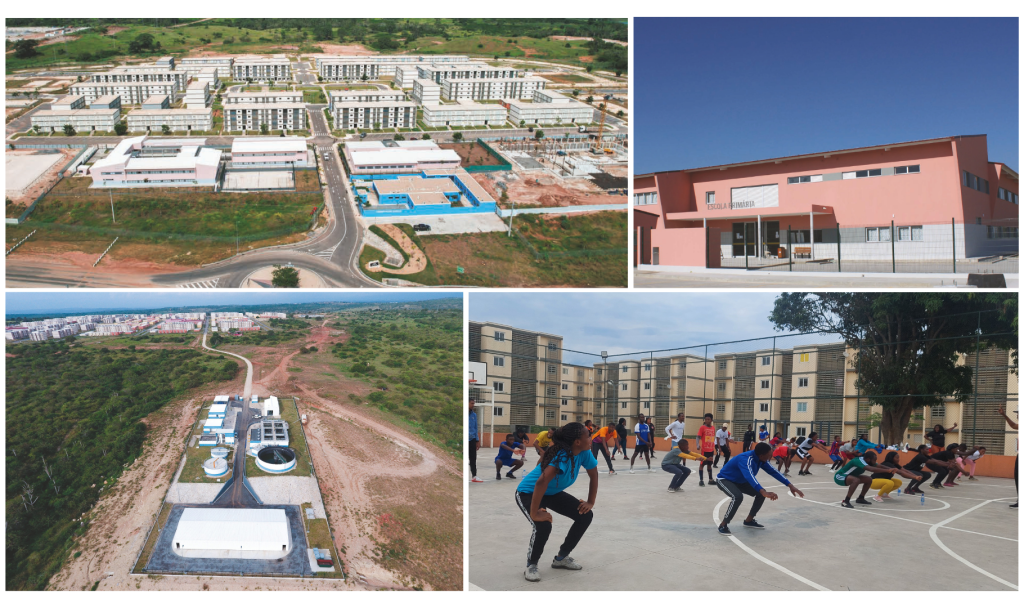
It is within this vision of development that Mitrelli, as a strategic partner to the Angolan State, has implemented 13 centralities across different provinces of Angola, representing approximately 19,000 housing units, with the capacity to accommodate around 133,000 residents, and has recently launched the 14th Centrality, in Mbanza Congo. These projects constitute urban hubs that integrate schools, healthcare facilities, water, energy, and sanitation infrastructure, as well as leisure areas and commercial spaces, forming true communities that promote economic development and social inclusion.
Returning to the initial question, it is important to clarify that population growth is not, in itself, either a threat or a guarantee of prosperity. The difference between demographic pressure and competitive advantage lies in the ability to create territories prepared to accommodate this population and unlock its capabilities. At the 13th World Urban Forum (WUF), this perspective was strongly reinforced: there is no sustainable development without sustainable urbanization, and no sustainable urbanization without adequate housing.
This context places Africa at the center of the future global economy and reinforces the assertion that this will be the “African century,” not only because of the size of its population, but because of the potential of its demographic dividend. However, this advantage can only be realized by transforming youth into productive human capital; a process that, in most cases, begins with access to adequate housing.
Indeed, the relationship between urbanization, housing, and economic growth is widely documented. OECD data indicates that urbanization has contributed significantly to increases in GDP per capita in Africa, accounting for approximately 30% of its growth over the past two decades. This is further evidence that urbanization should not be understood merely as a consequence of population growth, but as a strategic instrument for development.
Cities are the spaces where human potential is transformed into economic activity. They concentrate employment, knowledge, innovation, and production networks. In the African context, they will also be the main centers for the creation of new markets, value chains, and emerging economies. However, to fulfill this role, they must be planned, inclusive, and capable of keeping pace with the speed of demographic transformation.
Housing, when integrated into structured urban planning, becomes a platform for development, as it brings people closer to services, reduces mobility costs, improves access to education and healthcare, and creates the conditions for economic activity to emerge. It is this cumulative effect that transforms individuals into active economic agents and territories into engines of growth.
For Africa, this transformation requires an approach based on two complementary pillars. The first involves the planned development of new human settlements, capable of anticipating population growth and ensuring quality of life through the structured provision of housing, infrastructure, and essential services. Planning before occupation is, in this context, the most effective way to prevent unplanned urban expansion and promote balanced territorial development.
The second pillar focuses on the formalization and upgrading of informal and peri-urban settlements, whose transformation represents one of the greatest urban development opportunities in Africa.
The response involves land regularization, infrastructure improvements, expansion of basic services, and the integration of these territories into the formal city. More than an urban intervention, this is a measure of economic and social inclusion, capable of enhancing existing assets, attracting investment, stimulating local economies, and improving the quality of life of millions of citizens.
In Angola, this approach has been gaining traction, demonstrating that this transformation is possible when there is strategic vision, execution capacity, and alignment between the public and private sectors. The country allocates approximately 7.5% of its GDP to the residential sector, one of the largest areas of public investment, and has already built around 350,000 housing units. More relevant than the volume itself is the systemic impact: each housing unit generates between five and seven direct and indirect jobs, contributes to population retention, and increases productivity.
Similarly, the National Housing Program, aligned with the National Development Plan, has reinforced the focus on centralities and structured housing solutions, complemented by policies that encourage private sector participation, reduce construction costs, and promote guided self-construction models, primarily targeting the youth population.
The reopening of the UN-Habitat office in Angola in 2025 further strengthens this trajectory, bringing technical assistance and new financing opportunities for more inclusive and sustainable urban solutions.
Even so, the scale of the challenge requires a collective response. No single entity can independently meet future needs, making public-private partnerships a central instrument in addressing the complexity of urban transformation. While the public sector ensures regulatory frameworks, defines priorities, and provides institutional stability, the private sector contributes investment capacity, innovation, and execution.
These partnerships extend across multiple dimensions, including housing, complementary infrastructure, mobility, waste management, service digitalization, and local economic development. Their effectiveness, however, depends on clear principles: transparency, legal certainty, integrated planning, and active community participation. Without this alignment, population growth tends to translate into pressure on territories; with it, it can become a competitive advantage.
In a country such as Angola, where demographic growth will continue to be one of the main drivers of economic and social transformation, Mitrelli’s experience, combined with deep territorial knowledge and the ability to develop integrated urban ecosystems, positions the company as a strategic partner in building more inclusive, resilient, and future-ready cities.
The international recognition of the Teresa Afonso Gomes Centrality, in Bengo, distinguished by UN-Habitat as a best urban practice within the framework of the 13th World Urban Forum, reinforces this approach, which places people at the center of planning and consolidates a trajectory grounded in strategic execution, the delivery of projects at national scale, and the generation of sustainable value for communities.
We therefore return to the initial question: can population growth be a competitive advantage?
The answer is yes. But only when there is the capacity to anticipate growth, plan territories, and transform urbanization into a platform for development. In Africa, the success of the demographic dividend will depend, to a large extent, on how cities are built, integrated, and prepared for future generations.